
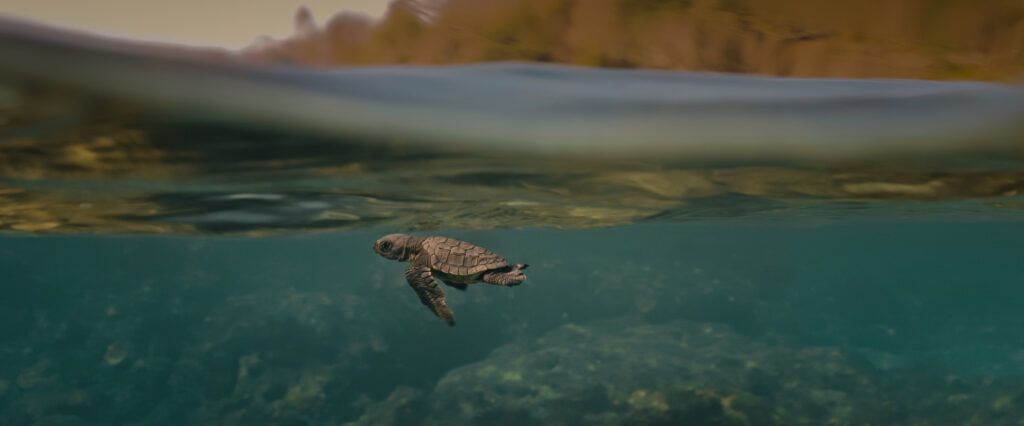
White beaches, blue ocean and tiny sweeps across the sand, as millions of little turtle hatchlings make their way to the sea. Their first precious steps were made possible along the Indian coastlines by one unsung hero, Satish Bhaskar.
For decades, Satish Bhaskar walked the remote coasts of the Indian Ocean in search of sea turtles. With only notebooks and determination, he recorded nesting beaches along 4000 km of India’s shoreline on foot. This was when little was known about these animals in the area.
The documentary Turtle Walker brings his extraordinary story to the screen, revealing how one man’s research helped transform the understanding of sea turtles across the Indian Ocean.
Director Taira Malaney said, “Satish Bhaskar spent several decades walking every inch of India’s coastline, discovering where sea turtles nested.”
When Bhaskar began his research in the 1970s, sea turtles faced serious threats from poaching and habitat loss. He found important nesting areas, and his fieldwork offered some of the first organised data on turtle numbers in the area.
Experts say this research later helped create stronger protections for endangered turtles in India.
Jill Fergurson, the film’s impact producer, says Bhaskar’s work continues to shape marine preservation efforts today.
Ferguson said: “His research was foundational to the protection of sea turtle species in India.”
Even though his work was important, Bhaskar stayed mostly unknown except to scientists. For Malaney, learning about him was almost unbelievable.
“I couldn’t believe that a man would maroon himself on islands for months at a time with nothing but sea turtles,” she said. But finding Bhaskar proved difficult; a simple man with no interest in fame or recognition, he had almost no digital presence
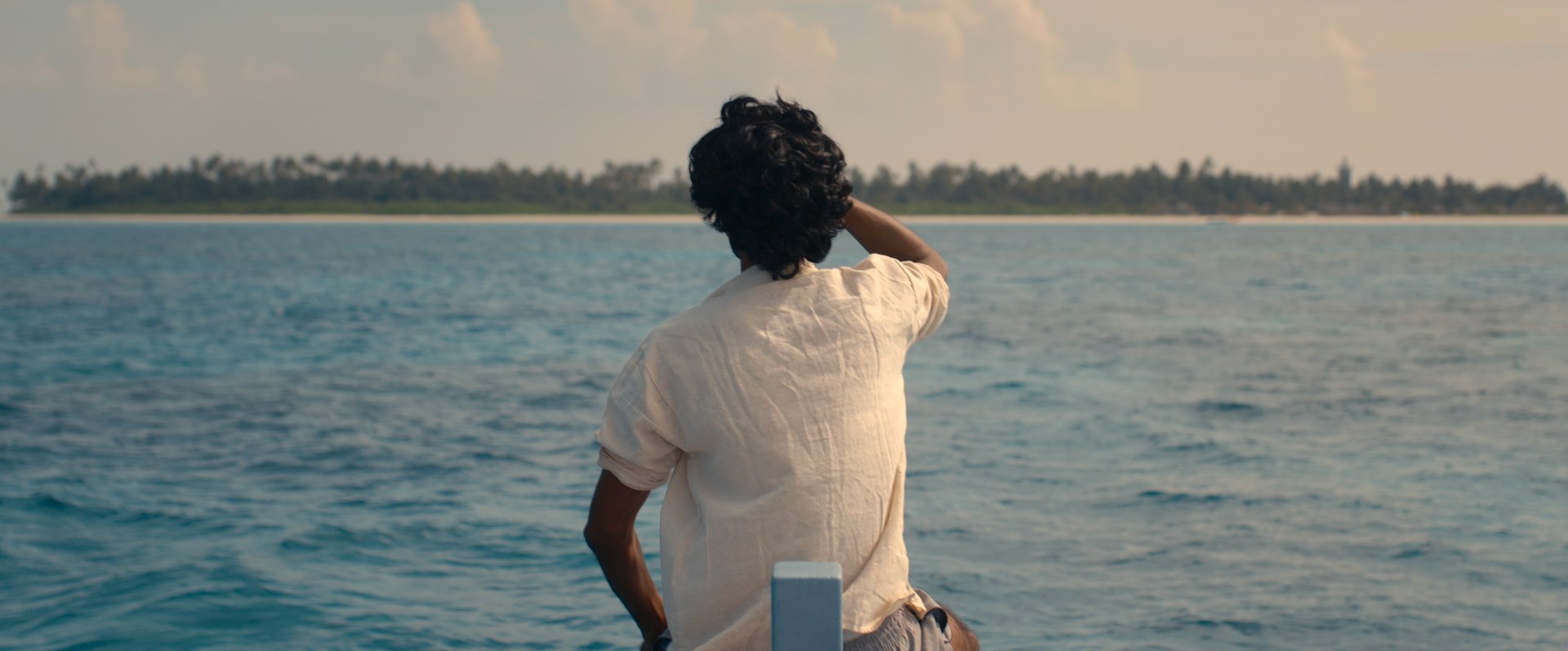
Malaney said: “He had no digital footprint at all, it was one of the hardest things to even find him.”
After eventually tracking him down, Malaney spent years building a relationship with him before he agreed to be interviewed on camera.
“When someone shares their life story, you have to build trust. It took time, patience and respect,” she said.
The result was a seven-year filmmaking process that combined archival material, interviews and footage of the landscapes Bhaskar once explored.
Cinematographer Krish Makhija said the team confronted significant challenges while filming in remote locations.
“Wildlife filmmaking is unpredictable. Some nights you walk for hours and see nothing,” he said.
Much of the filming took place on isolated beaches where researchers monitored turtle nesting sites at night.
“Every night we walked almost 14 kilometres along the beach carrying equipment in complete darkness,” Makhija said.
The film captures the beautiful and rare sight of a nesting leatherback turtle, the largest known species on the planet. The shot captured at night in the remote islands of Andaman and Nicobar highlights the immense effort of the crew and researchers.
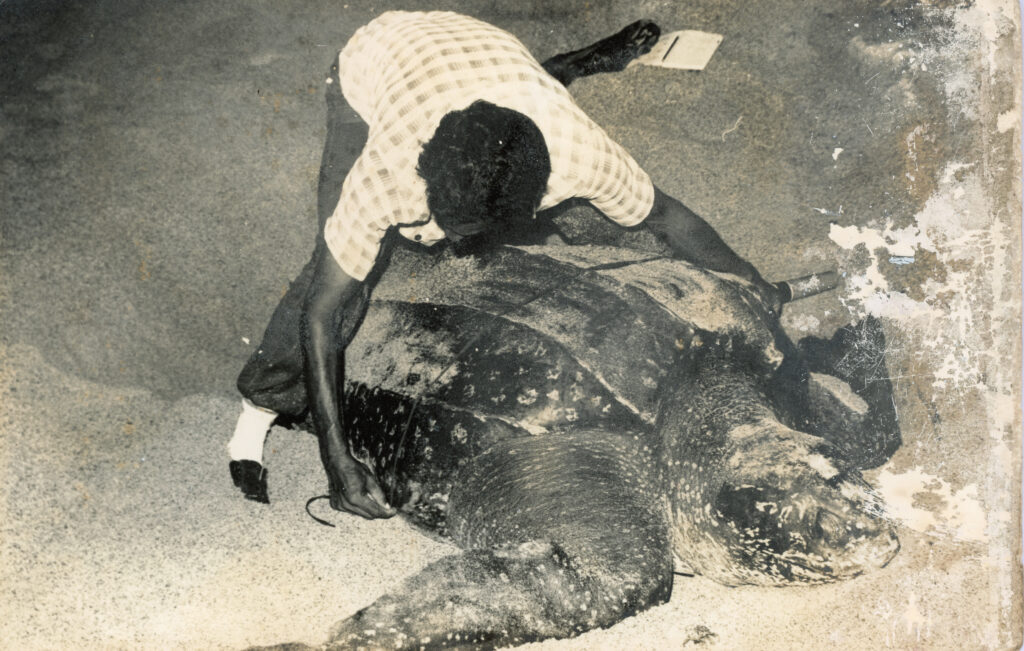
“Once the turtles appear, everything changes. The exhaustion disappears and the moment becomes magical,” he said.
The cinematographer added that documenting wildlife often requires patience and the ability to respond quickly to unexpected moments.
“You have to be present and ready because the most important moments happen unexpectedly,” he said.
Beyond telling Bhaskar’s story, the film also aims to highlight the environmental challenges facing sea turtles today. According to the filmmakers, one of the most pressing threats comes from marine pollution.“
A lot of the main threats to sea turtles today are plastic ingestion and getting trapped in ghost nets,” Malaney said.
Ghost nets are abandoned fishing nets drifting in the ocean. They can trap marine animals and cause fatal injuries.
Through its impact campaign, the Turtle Walker team has partnered with conservation organisations to address these issues.
Initiatives linked to the film include marine rescue networks, education programmes and efforts to retrieve ghost fishing nets.
The project also seeks to involve local communities in conservation efforts.“There’s a shift happening now towards more inclusive, community-driven conservation,” Malaney said.
For the filmmakers, the documentary ultimately aims to motivate a new generation of environmental advocates.
“I wanted to find stories that show young people that an individual can make an impact,” Malaney said.
Although Satish Bhaskar spent much of his life working quietly in the field, his research continues to influence marine science today.
Generations of scientists and conservationists have built on his work, expanding turtle research across India and beyond.
By bringing his story to a wider audience, Turtle Walker ensures that Bhaskar’s legacy will continue to inspire both researchers and the public. As the film shows, protecting the oceans often begins with the persistence of individuals willing to dedicate their lives to understanding and safeguarding the natural world.
All photos attributed to Taira Malaney and the Turtle Walker Film Team